
Denver Court Docket Searches
The court itself posts no stand-alone Denver court portal. Use Missouri Case.net instead. Pick a search by name, case number, filing date, or scheduled hearing, then filter to Worth County or the Fourth Judicial Circuit. Add the correct Denver case category and a tight date range. A citation number beats a broad name search every time. Read the result header with care. It lists county, division, category, filing date, and status. A blank result could mean a wrong filter. It could also mean a misspelled name, a protected case, or an older record that predates the index. One more caution: a docket entry in the public index does not open every linked document.
- Choose the Case.net method that fits the Denver information known.
- Use Worth or Fourth Circuit and the correct case category.
- Read the Denver case header and docket event list.
- Use scheduled-hearing search for a Denver court date.
- Ask the Worth Circuit Clerk about authorized copies or terminal access.
Denver Court Records in Circuit System
Denver counted just 32 residents in the 2020 Census incorporated-place table. That size buys no separate court system. Missouri runs one unified circuit structure, so municipal, traffic, civil, criminal, probate, family, juvenile, and assigned associate matters all route through it. When you search court records for Denver, follow the division and case type shown on the entry. Skip the hunt for a village-run docket. The Worth Circuit Clerk keeps the local court record. A Denver address tells you where a matter arose. It does not move the case out of the circuit system that holds its docket.
Inside the Denver Municipal Court
Denver municipal violations, where filed locally, go through a municipal division inside the circuit-court framework. On Case.net, a Denver citation may be tagged traffic or municipal. The village lists no municipal court address, judge, phone, schedule, public docket, or payment portal of its own. So start with Case.net and the Worth Circuit Clerk. Do not assume a stand-alone Denver court. Rule 37 sets operating standards for municipal divisions. It is not evidence of a separate Denver online system. The Denver case header tells you the live division.
Denver Court Portal Status
There is no city-run docket, calendar, citation, or payment portal for Denver. Case.net is the public route for a Denver search. The Worth Circuit Clerk handles records, copies, and local logistics. A village administrative page is not a court portal. A State Auditor filing is not one either. Neither should be used to pay or locate a Denver case. Missouri eFiling is a restricted tool for lawyers and parties to submit filings. It is not the public search interface. When you need a real court response or a way to pay, rely on the case notice, the current Case.net entry, or the clerk.
Finding Denver Court Dates
Case.net offers a Scheduled Hearings & Trials Search. Use it with Worth selected. Add a short date range and any current location filter to catch a Denver-related setting. The result may show date, time, location, division, event type, and status. Treat it as a calendar snapshot. A Denver hearing can be continued, reset, canceled, or moved after you look. The status labels carry real meaning. "Scheduled" means the event sits on the calendar. "Continued" or "reset" keeps the old history but shifts the active setting. "Disposed" records an outcome, yet later payment or compliance entries can still appear on the docket.
| Date | The active Denver-related court date. |
|---|---|
| Time | The posted docket-call or individual-event time. |
| Location | The Worth court location or current remote notation. |
| Division | The municipal, traffic, associate, circuit, or other unit. |
| Setting type | Arraignment, pretrial, motion, trial, plea, status, or compliance. |
Denver Court History Is Not Case Volume
Local history gives Denver color, not case counts. The county profile calls it the oldest village in Worth County. It was first named Fairview in 1849. It became Grant's Hill, then Denver after 1871. It mentions an 1880 healing well, a later trade-center decline, historic schools, the Grand River, and Sowards Ford. None of that geography measures court volume, fills a court calendar, or proves a Denver municipal portal. One more trap: a 2026 Denver municipal filing in the State Auditor materials is an administrative and financial document, not a docket statistic. The county's Denver profile tells the community story behind these court records.
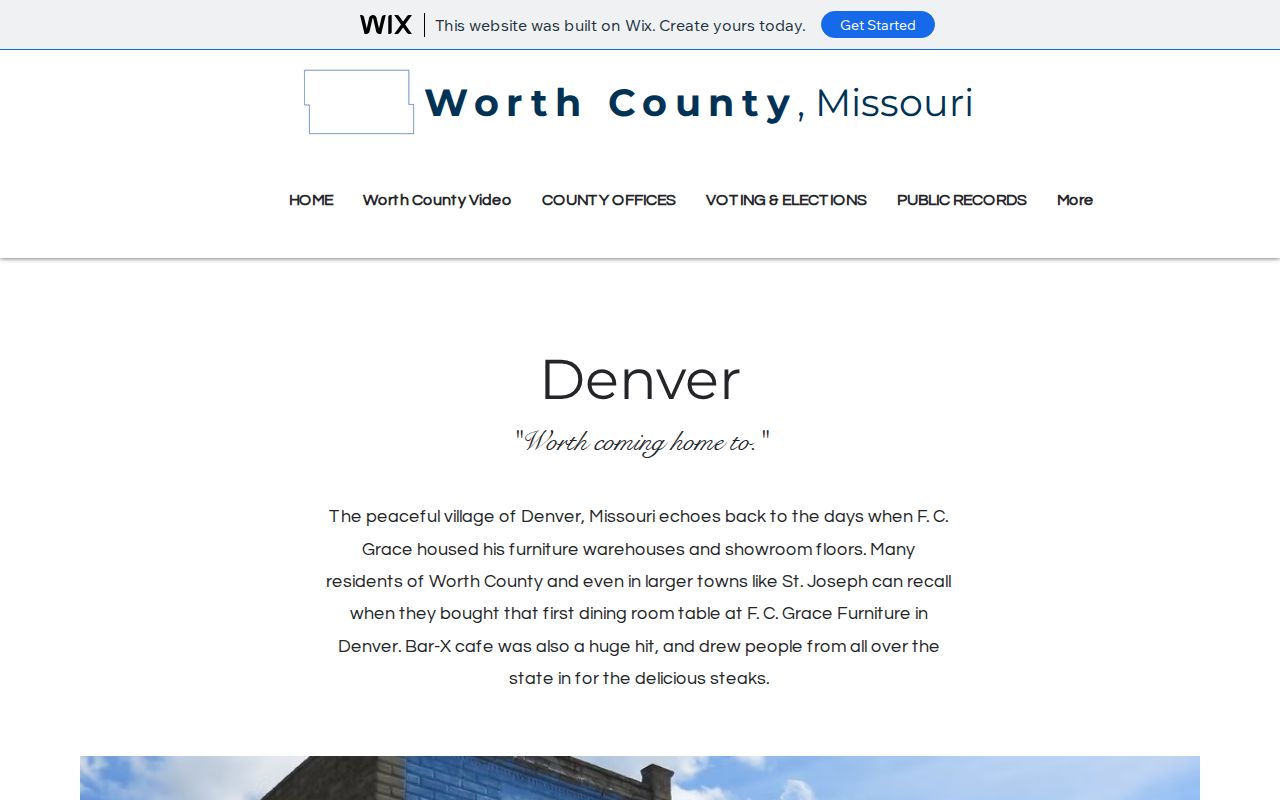
Denver history can orient you, but history cannot answer a records question. For a current case, go to Case.net or the Worth County clerk.
Denver Traffic Ticket Lookups
Start a Denver ticket lookup with the citation or case number. Confirm the category, court date, docket events, and disposition on the record. Check any public payment or compliance entry too. A uniform citation opens traffic or municipal litigation. There is no separate Denver ticket site to check. Work from the court category shown in the case itself. A Denver court docket is not a driving record. It holds procedural court information and nothing about current licensing status. For the wider picture, see Worth County Traffic Court.
Denver Court Categories Matter
Category drives everything in a Denver search. A village violation may land in a municipal or traffic bucket. A Denver civil, criminal, probate, family, or associate matter belongs to the circuit system. Before trusting a name match, compare county, division, year, party role, and status. Those fields confirm you have the right Denver court record. Never read a disposition into a case number. Never read one into a failed search. The full county method lives in Docket Search. The Denver route still begins with naming the local record type.
How Denver Cases Reach the County
Denver cases run through Worth County's court structure rather than a standalone city system. That covers municipal and traffic matters in circuit-court divisions. It also includes Denver civil, criminal, probate, family, and assigned associate cases. Each filing gets a number and a category. The clerk records both in the statewide system. Search by category first, then follow whatever division the public docket names.
Docket flow: Denver municipal division › Worth County court divisions › Circuit Court of Worth County.
A Denver docket can hold a lot: filings, settings, service, continuances, pleas, judgments, payments, dispositions, and appeals. Federal cases are different. They live in a separate federal docket system entirely.
Denver Court Copy Route
Need a Denver court file you can't pull up remotely? Go through the Worth Circuit Clerk in Grant City. Under the county public-records policy, requests happen in person or in writing. Phone and fax do not get file service. Give the clerk a Denver case number or a narrow description. Save the phone for logistics only.
The fees are set out plainly. Self-made in-person copies run 25 cents per page. Copies staff make from a written request cost 50 cents per page. Add 25 cents for an envelope, plus postage and any listed costs. Staff-made in-person copies can take up to three business days. Written requests can take up to ten business days, not counting state holidays. Confirm current charges before you pay.
Who Can See Denver Court Records
Denver court records are often public, but that label has limits. A public case can still contain restricted documents. Juvenile, mental-health, sealed, expunged, protected-person, juror, search-warrant, and filing-information material may all be off limits. A Case.net listing may show an attachment as unavailable. Ask the clerk about the authorized terminal or the copy route.
Denver access rules.
Court Operating Rule 4 governs official recordkeeping, docket material, security, and public terminals.
Section 610.023, RSMo provides the public-record response framework.
Section 610.140, RSMo explains expungement's access consequences.
Denver court records serve well for a known case, a court date, or civic and historical research. For anything that matters, verify the point with the office holding the record.
Denver Historical Court Records
Denver questions that predate Case.net may point to the Missouri State Archives Judicial Records Database, which searches by county, court type, year, cause, and name. County records and microfilm references can also help. Treat archives results as historical leads, not live docket status. For current record access, stick with the Circuit Clerk.
Denver Court Records and the Grand River
Denver's Grand River and Sowards Ford references are geography, not search fields. They orient a searcher; they cannot find a case. What actually matters is the court identifiers. Case number, division, county, filing year, and the date you searched are the keys. Those facts keep a later record check possible even when a setting changes or an old record needs an archive route. No place name can replace the details that distinguish one Denver docket from another.
A Denver document listed as unavailable may be older, secured, sealed, confidential, or outside remote access. Missouri's file-viewer rules may then require a public-access terminal or a clerk-assisted request. Ask for the permitted route; skip informal workarounds. The clerk can explain procedure and copy arrangements. The clerk cannot open a restricted Denver file or promise a displayed date stays fixed.
Note: Record your Denver search date and filters. A court calendar and document-availability status can change after the initial lookup.
Denver Court Records and Local Filings
A Denver municipal filing recorded by the State Auditor in 2026 is administrative context and nothing more. It proves a local-government filing arrived. It says nothing about a Denver court case. No municipal court docket, judge, public portal, or volume of citations appears in it. Financial and audit material cannot tell you whether a Denver citation was filed, a hearing was reset, or a court document is public. Keep the village record and the court record in separate lanes.
For a real Denver court question, start with the case number, citation number, or a current Case.net search. Then confirm the division and court date from the docket. If the document you want isn't displayed, ask the Worth Circuit Clerk. Ask whether it's eligible for remote view, terminal review, or a written copy request. That sequence keeps the administrative record, the court docket, and the historical record where each belongs.